


Holzbausystem als Katastrophenhilfe – Modular Timber Shelter for Kesennuma, Japan
(Modular Timber System for Post-Disaster Emergency Housing)
Project Period March – April 2011
Location Kesennuma, Miyagi Prefecture, Japan
Team: Tang Jie, Ando Workshop, University of Chiba, Local Fishermen Community, Kesennuma
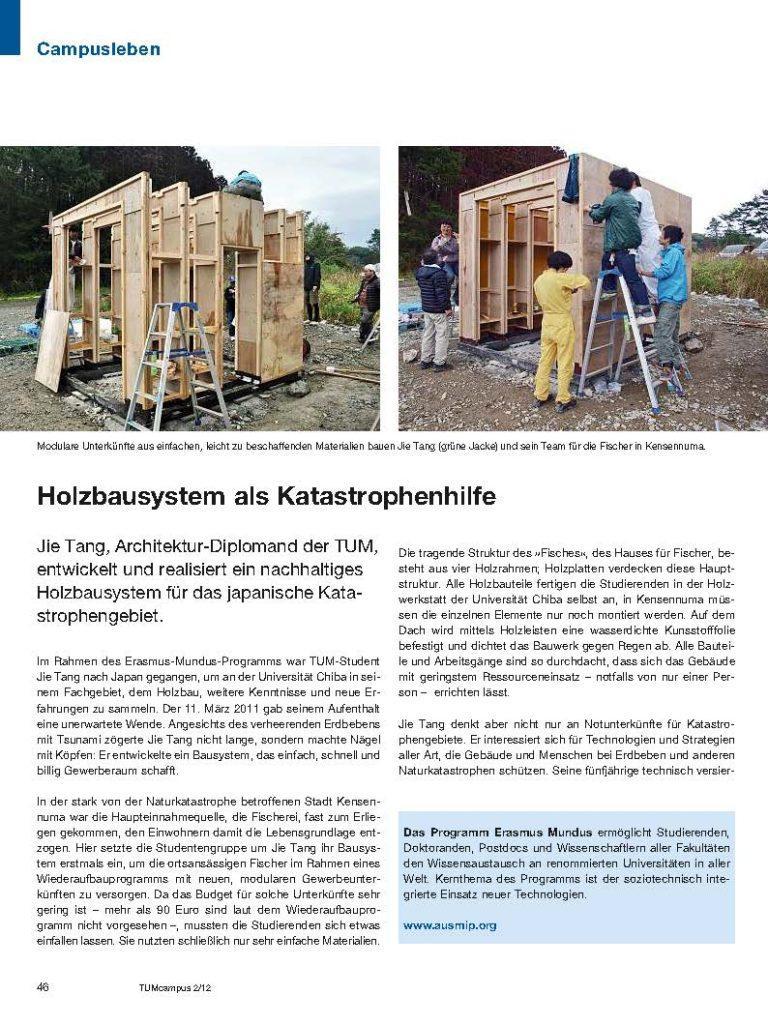
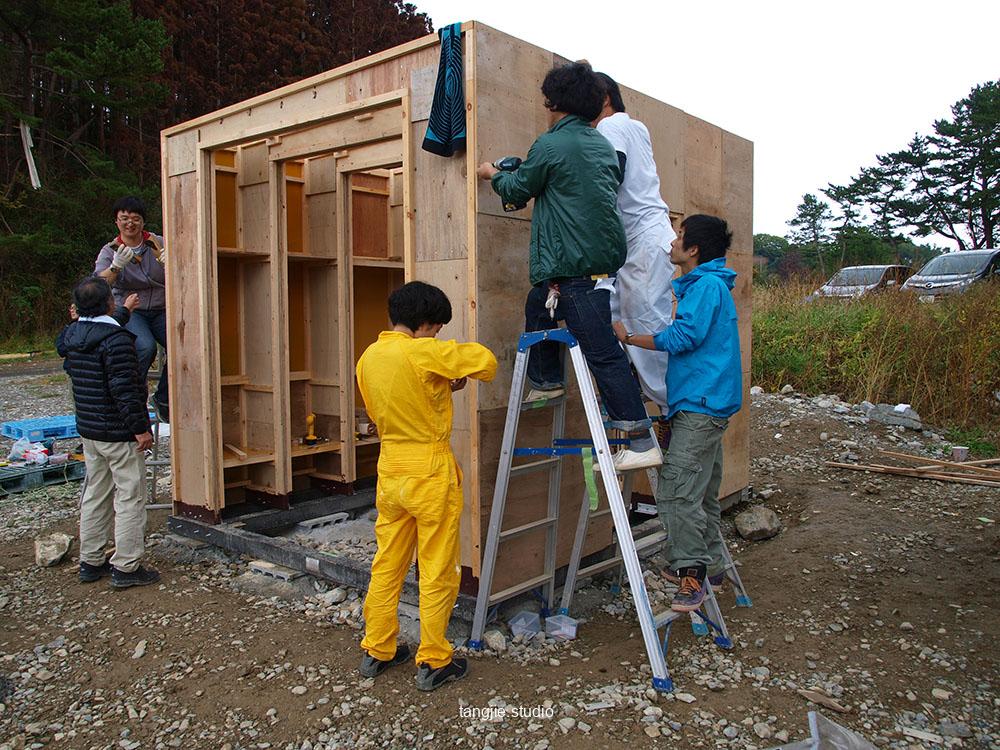
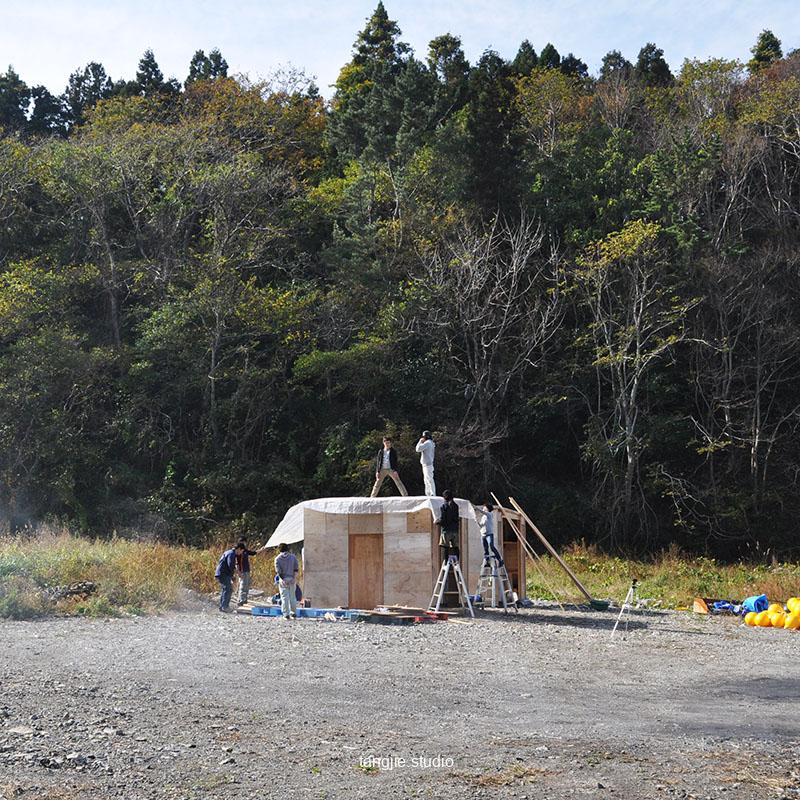
During the post-disaster reconstruction following the 2011 earthquake and tsunami in Japan, this project developed and realized a modular, quickly assembled timber shelter for the fishermen of Kesennuma. Designed to be built with locally available materials and minimal tools, the prototype provided an affordable and immediate architectural response for people who had lost their working facilities.
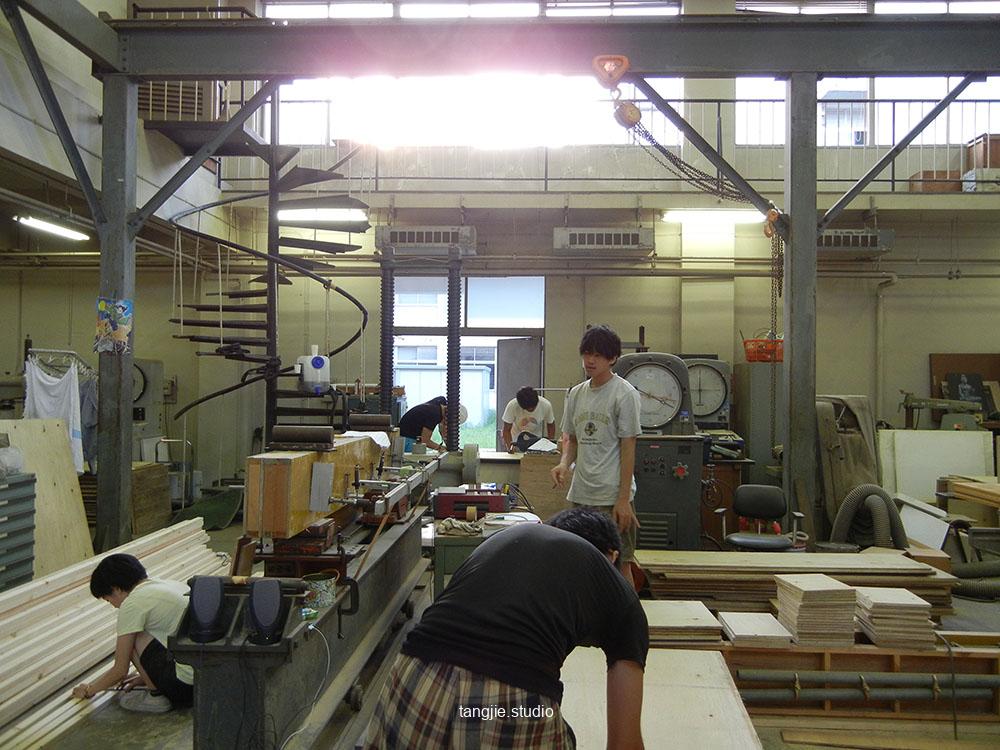
The system is based on standardized timber frames, all of which could be prefabricated in the workshop and then assembled on-site without heavy machinery. Lightweight cladding protected the structure from rain, while the interior offered essential space for storage, rest, and daily work. With a construction cost of only around 90 euros, the project demonstrated a low-cost, adaptable, and resource-efficient strategy for emergency architecture in disaster-stricken areas.
This work highlights how simple construction logic, modularity, and local materials can create fast and effective architectural responses in extreme situations.
灾后应急木构体系 — 日本气仙沼渔民的模块化避难屋
项目时间 2011年3月 – 2011年4月
项目地点 日本宫城县·气仙沼
团队:唐杰,日本千叶大学安藤教研室,当地渔民
项目简介
在日本311大地震与海啸灾后重建期间,本项目为气仙沼受灾渔民设计与建造了一套可快速搭建、由当地可得材料制作的模块化木构应急居住单元。团队在当地进行材料调研、结构设计及现场施工,仅以约90欧元的预算完成单体原型建造。
建筑系统采用标准化木框架结构,所有构件均可在木工坊预制并在现场快速拼装,无需大型设备。外覆板材可临时抵御风雨,室内空间为渔民提供基本的储物、休息与作业功能。该项目展示了低成本、可扩展、适应性强的灾后木构建造策略,并为当地社区在资源有限的情况下提供即时帮助。
Tang Jie Architecture Lab & Production Studio